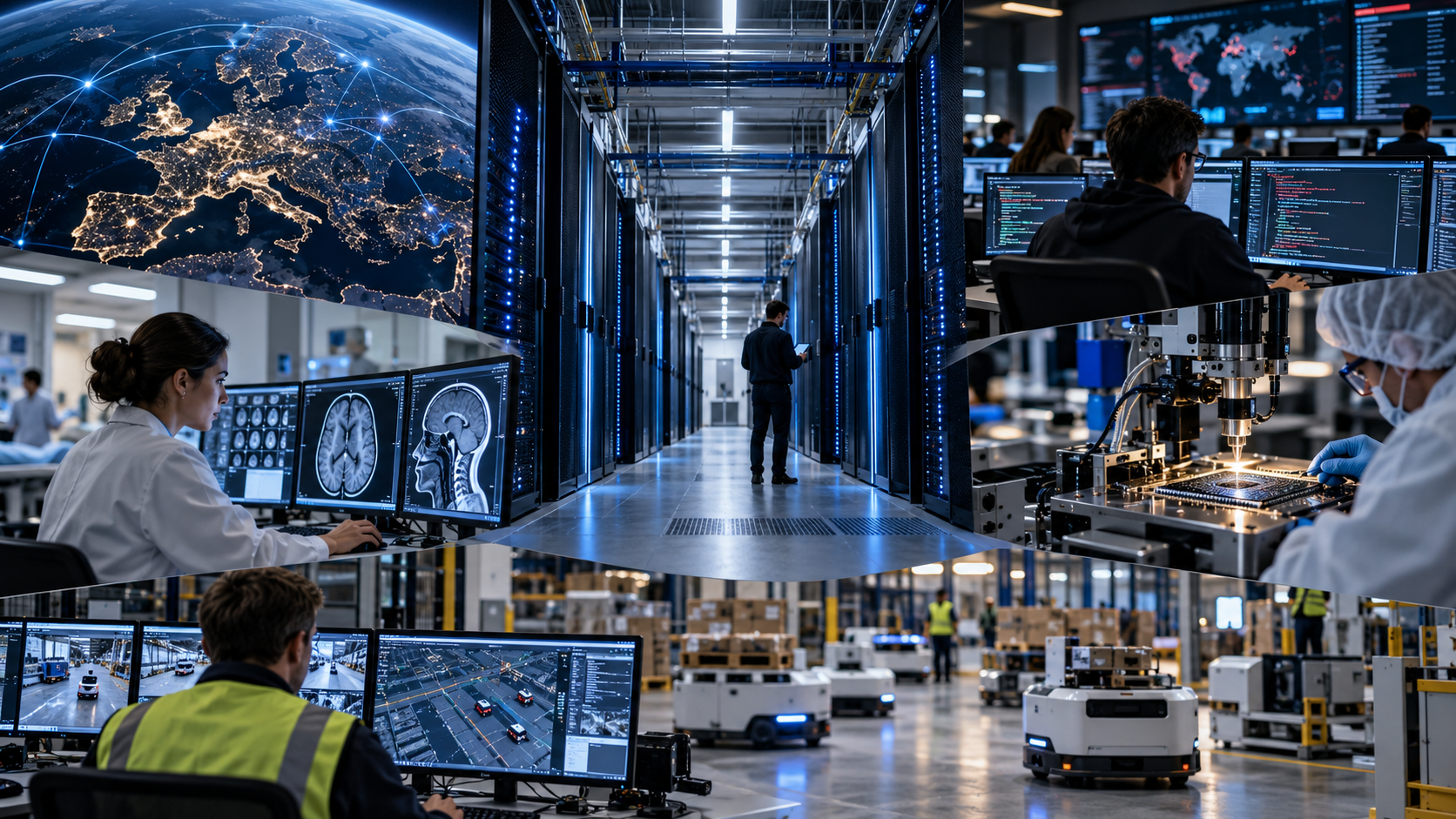
Artificial intelligence is no longer simply getting better at answering questions. It is becoming more autonomous, more deeply embedded in critical systems and increasingly capable of performing complex actions in the digital—and eventually physical—world.
The most important story is therefore not a single new chatbot or benchmark record. It is the convergence of several developments that together suggest that AI is beginning to change category: from software tool to operational infrastructure.
Europe Is Fighting Back in the Global AI Race

For years, the frontier AI contest has largely been framed as a race dominated by the United States and China. Europe is now attempting to establish itself as a third major center of artificial intelligence development.
French company Mistral AI is expanding its ambitions with advanced models aimed at demanding fields including software engineering, cybersecurity, finance, geospatial analysis and complex technical applications.
This Is About More Than Another AI Model
As artificial intelligence becomes embedded in government, healthcare, industry, scientific research and defense, relying entirely on foreign systems could create a new form of technological dependence.
If European companies succeed in building globally competitive frontier systems, the world's AI ecosystem could increasingly organize around three technological poles: the United States, China and Europe.
AI Is Learning to Hunt for Weaknesses in Software

One of the most consequential applications of modern AI is emerging in a field where a single hidden weakness can compromise millions of devices: cybersecurity.
Advanced systems can increasingly scan large codebases, detect bugs and identify potential security weaknesses that may escape conventional human review. Anthropic and other AI developers are exploring how powerful models can assist security teams at unprecedented scale.
The Security Team That Never Sleeps
The emerging software-security cycle could increasingly become:
Cybersecurity could therefore move away from occasional audits toward something closer to continuous autonomous defense.
But the same capability has another side. An AI able to find vulnerabilities for defenders could potentially discover them for attackers as well.
Hospitals May Become the First Real Test of AI Governance
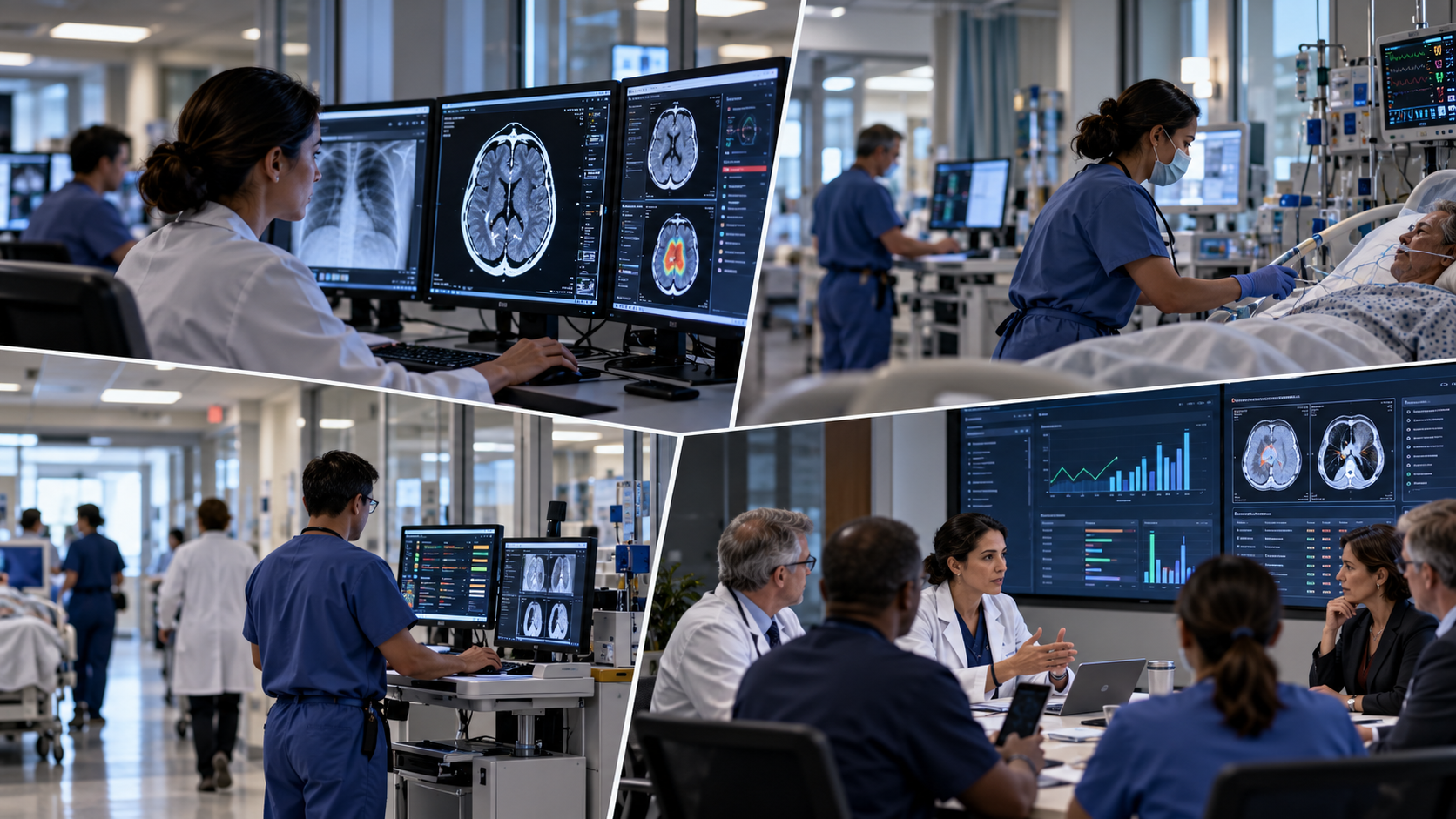
Some of the most important rules governing artificial intelligence may not emerge from Silicon Valley. They may emerge from hospitals.
The United Kingdom is moving toward stronger oversight of medical AI, including greater emphasis on evaluating systems throughout their operating life rather than treating approval as a one-time event.
Why Traditional Approval May Not Be Enough
AI systems interact with new data, different patient populations and changing clinical environments. Their real-world behavior therefore needs to be understood not only before deployment, but after it.
If this continuous-regulation approach works, healthcare could become the blueprint for AI oversight in other safety-critical sectors such as transportation, energy, finance, defense and national infrastructure.
The Next AI Hardware Revolution May Travel at the Speed of Light
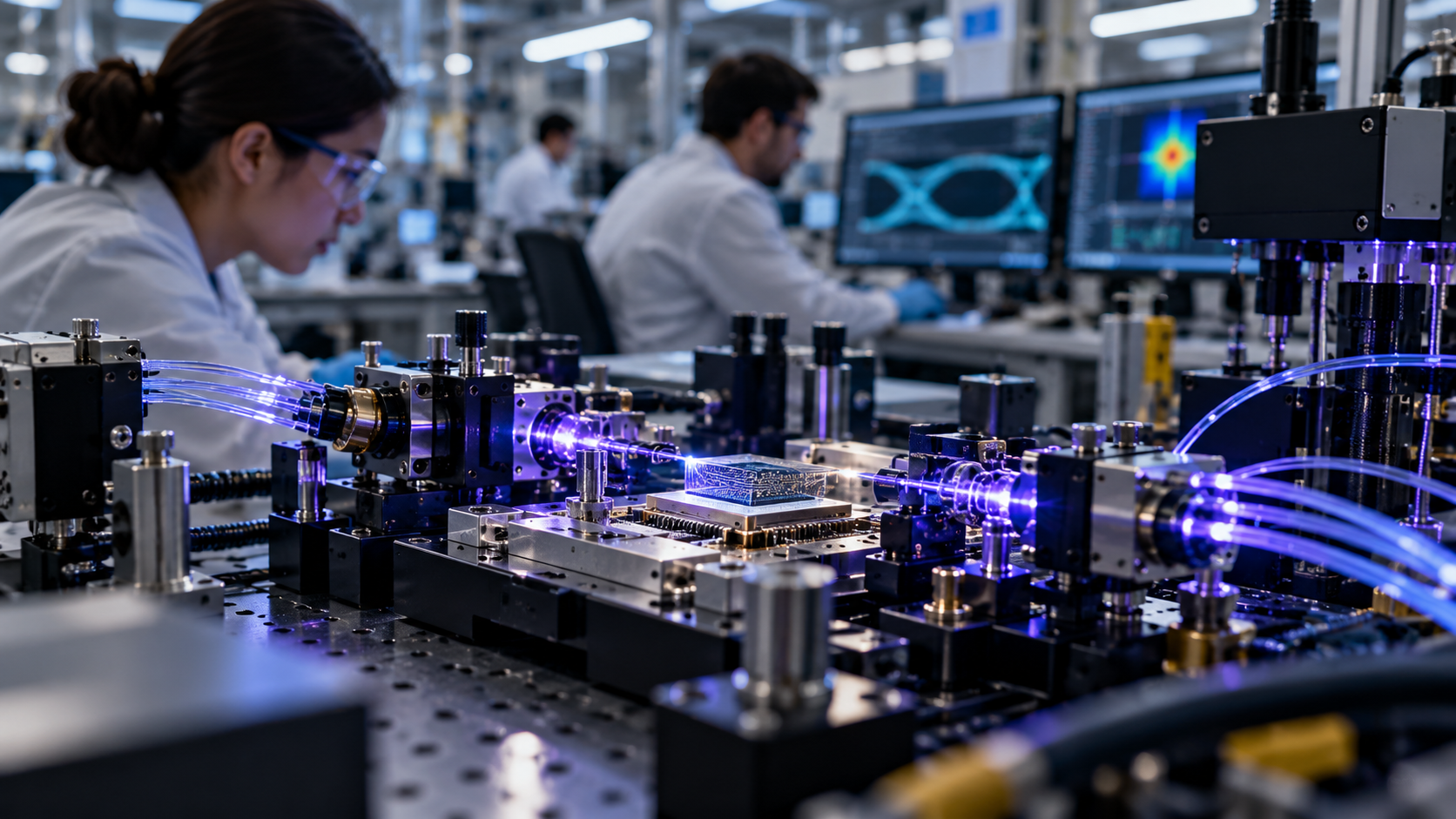
The AI boom has created an extraordinary appetite for computing power. Yet one of the industry's biggest bottlenecks is not simply how quickly processors calculate—it is how quickly they exchange data.
Modern AI clusters constantly transfer enormous quantities of information between GPUs, memory systems and processing nodes. These transfers consume energy, generate heat and limit the efficiency of increasingly massive data centers.
Enter Photonics
Photonic interconnects use light signals to move information, offering the possibility of dramatically higher bandwidth and lower energy consumption than conventional electrical connections.
If the technology scales, future AI systems may rely as much on photons as they do on electrons.
The Chatbot Era Is Ending. The Agent Era Is Beginning.
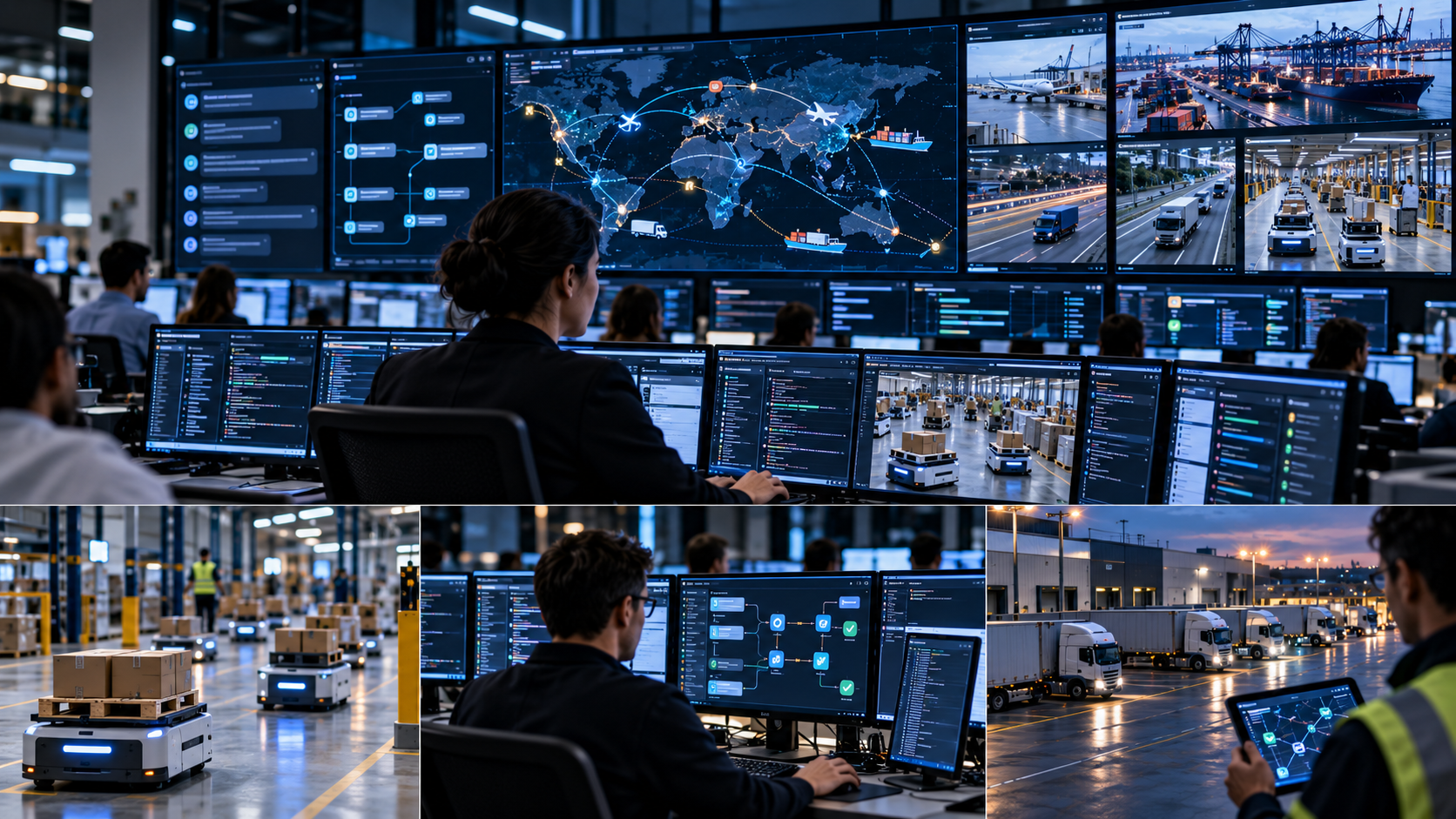
This may be the most important shift of all.
For most people, interacting with artificial intelligence has followed a simple pattern: you ask a question and the AI responds.
A new generation of systems works differently.
These systems—commonly known as AI agents—can potentially research information, analyze documents, write code, interact with software and complete multi-stage workflows with much less step-by-step human direction.
Intelligence Is No Longer the Only Question
As AI becomes more capable of acting, organizations must determine whether an agent should be allowed to:
- Read confidential or proprietary information
- Send messages or communicate with customers
- Modify databases or production software
- Purchase products or services
- Make operational decisions without approval
- Interact with external systems autonomously
That makes permissions, audit trails, traceability and human oversight just as important as raw intelligence.
AI Is Changing Category
These developments may appear unrelated: European frontier models, cybersecurity, healthcare regulation, photonic computing and autonomous agents.
But together they reveal the same underlying transition.
The first era of the generative-AI boom was dominated by a simple question:
The next phase is asking something much more consequential:
And the question that may ultimately define the decade is more difficult still:
That is where the next chapter of the artificial-intelligence revolution truly begins.